
Last updated November 14, 2026
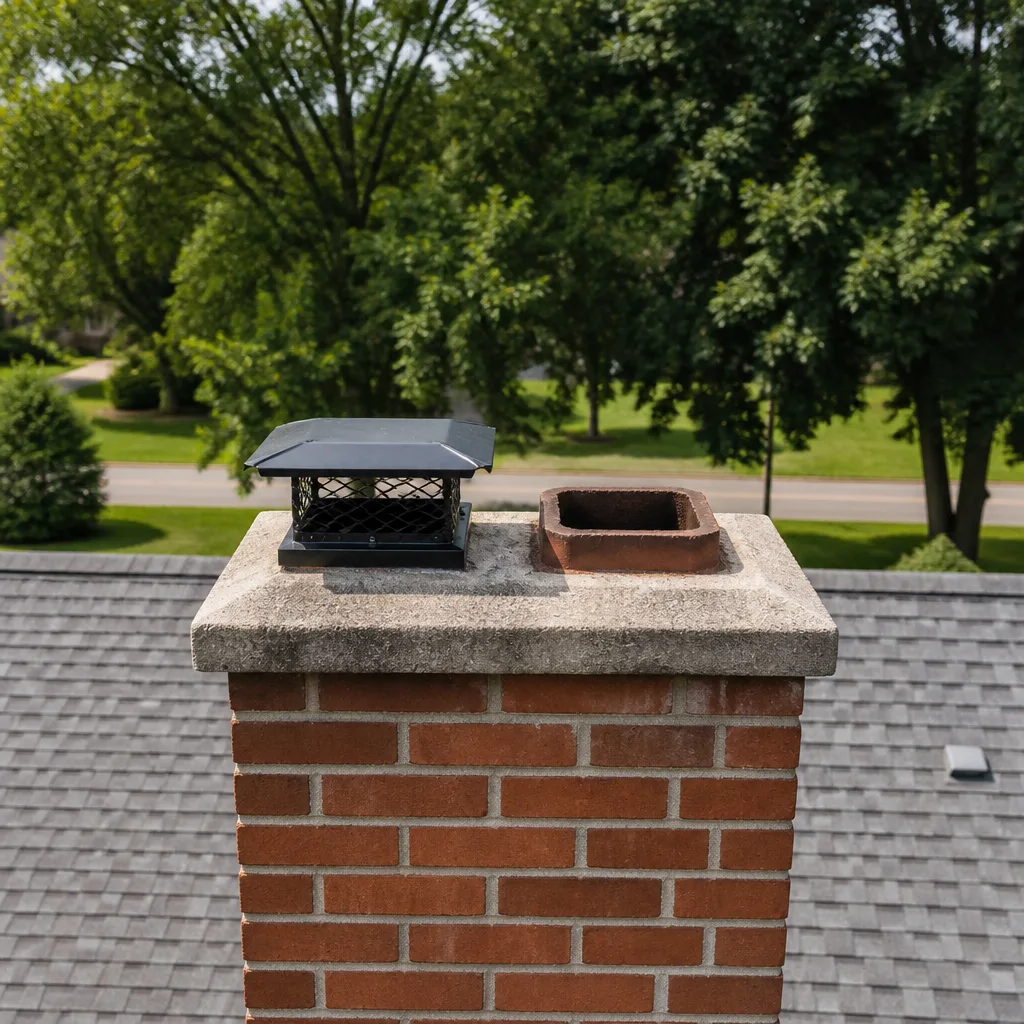 Sweep & inspection
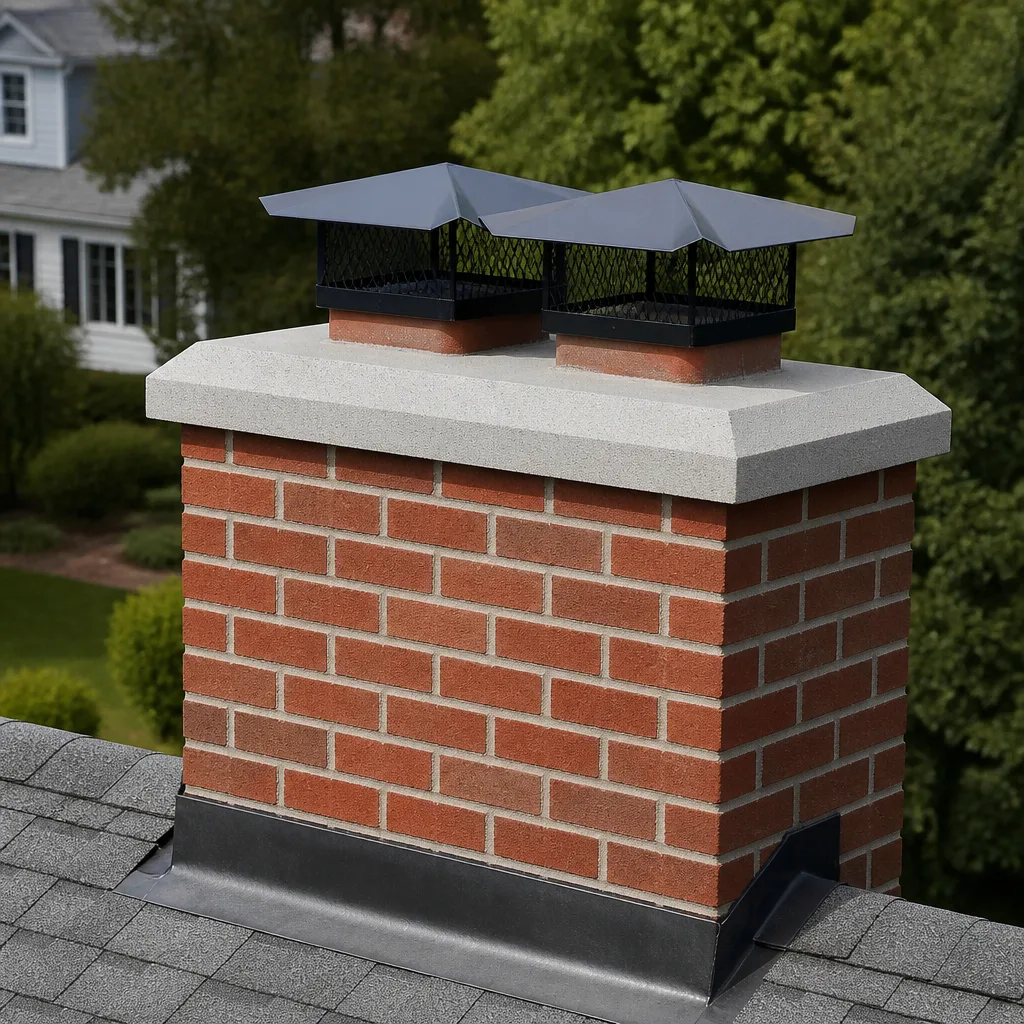 Caps & crowns
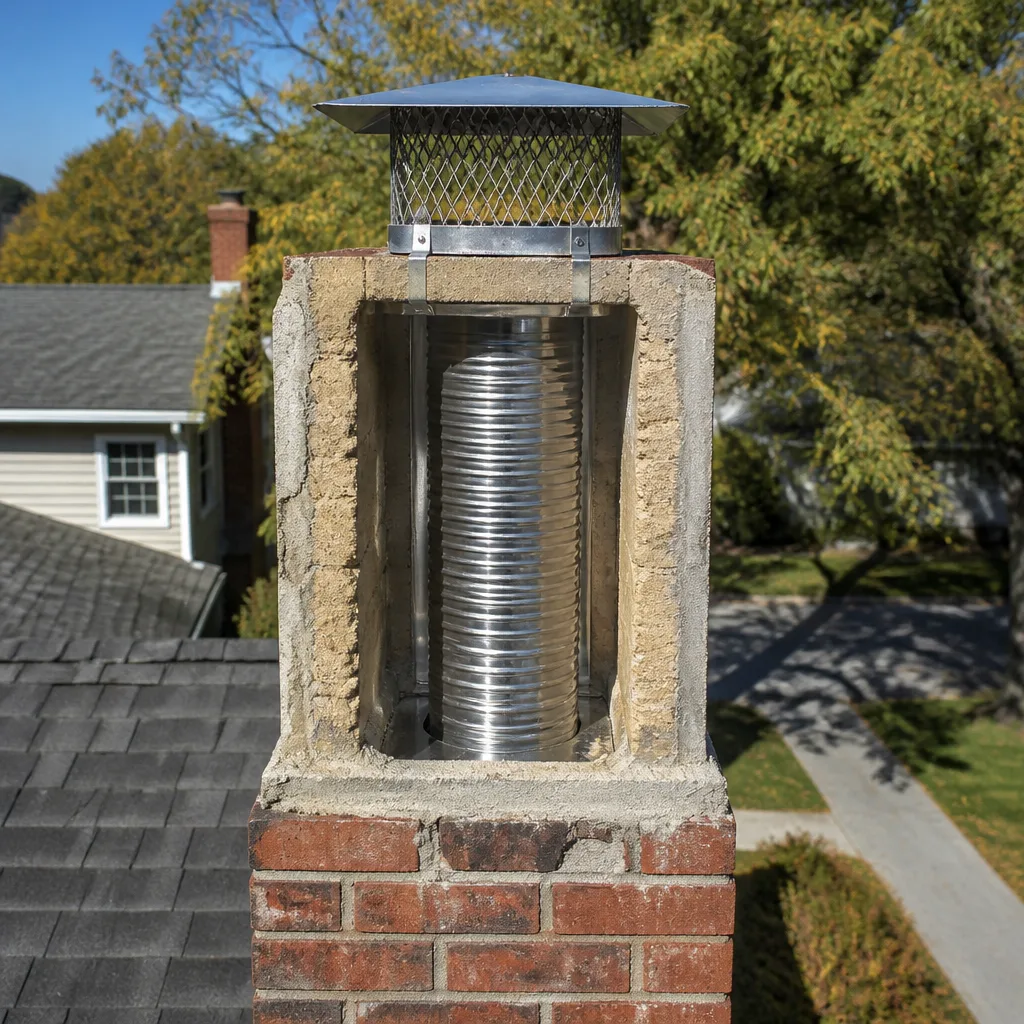 Flue relining
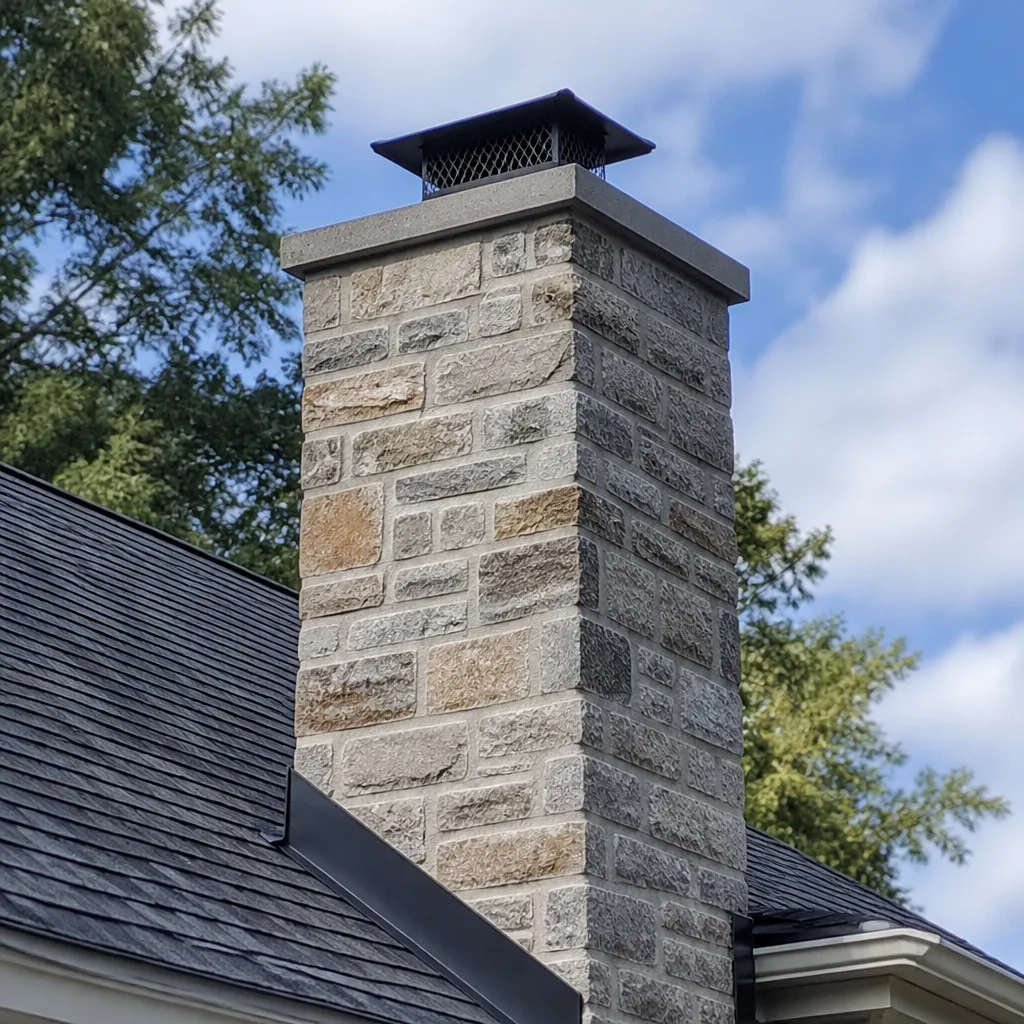 Masonry repair
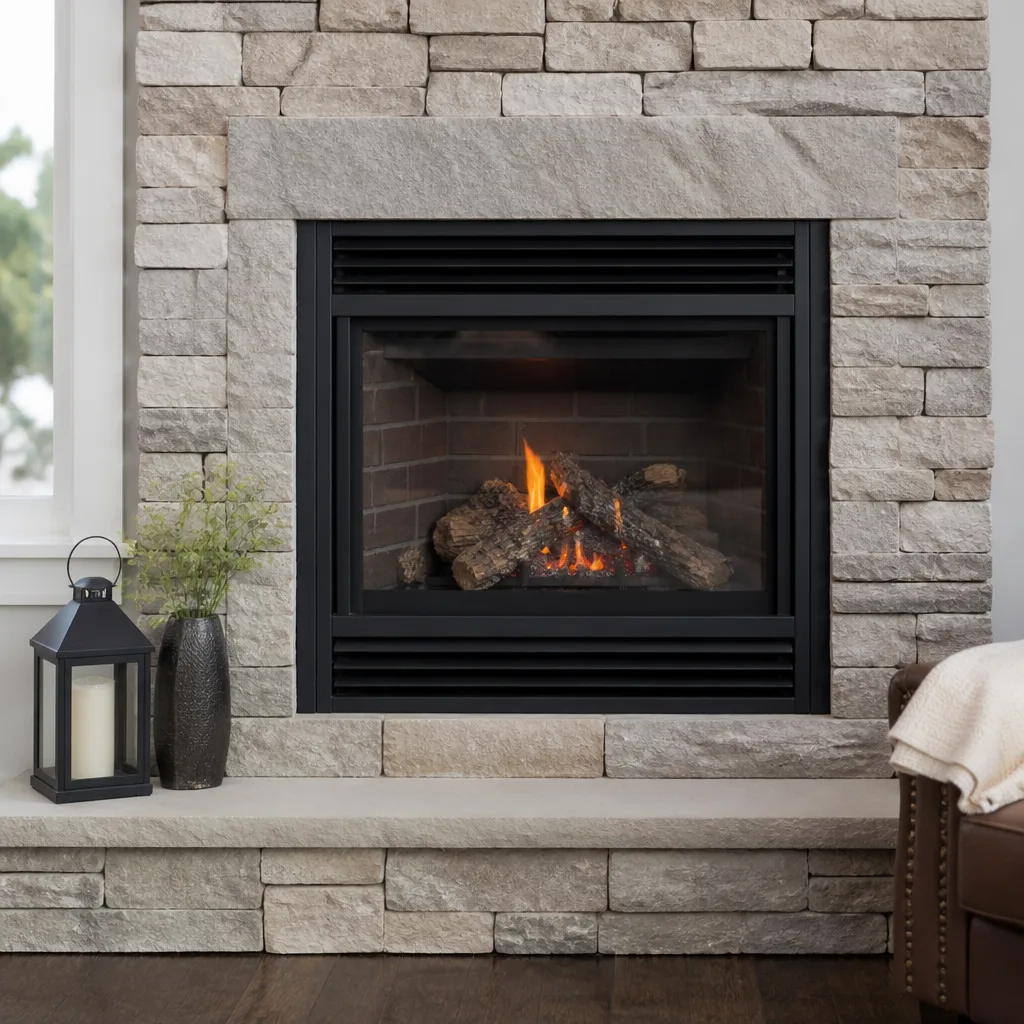 Gas fireplace service
Level 1 sweep and inspection to the NFPA 211 annual standard - flue, crown, cap, and flashing checked and photographed
Chimney sweep logs do not sweep chimneys. They loosen some creosote - which then falls where a brush and vacuum still have to collect it.
Choosing the Right Chimney Cleaning Brand: A Buyer’s Guide for Durham
A flexible stainless liner installed with the wrong gauge steel for a wood-burning application doesn’t fail on day one. It fails two or three seasons later, when creosote has had time to corrode through metal that was never rated for that temperature range. By then the installer is long gone and the homeowner is left holding a warranty card for a product nobody can name. That’s the gap this guide closes. Most homeowners never learn what brand of brush or liner a company is putting into their chimney, or whether the material is approved for their specific appliance. We’re going to fix that for Durham readers, with the questions to ask and the answers to listen for.
Quick Answer
The “right” chimney cleaning brand isn’t one product name; it’s a contractor who can tell you, before work starts, what brand and specification of liner, cap, sealant and brush they’re using and why. A chimney specialist stocks industry-recognized products like DuraFlex flexible liners, HeatShield resurfacing material, Gelco sealants, and Olympia Chimney components on the truck, and matches the material to your appliance type and flue condition. A generalist sources whatever is cheapest at the big-box store that week.
Styles & brands we work with
- Sweep & inspection
- Caps & crowns
- Flue relining
- Masonry repair
- Gas fireplace service
Table of Contents
- Why the Brand Behind the Brush Matters
- The Four Product Categories That Actually Affect Your Safety
- What “UL Listed” Really Means on a Chimney Product
- How to Ask a Contractor What They’re Installing
- Contractor-Grade vs. Builder-Grade Chimney Caps in Durham’s Wet Climate
- Stocked on the Truck vs. Sourced Job-by-Job
- What Durham Homeowners Should Know About Liner Systems
- Building Your Own Product Library
Why the Brand Behind the Brush Matters
When people search for chimney cleaning, they’re usually thinking about the sweep itself. The brushing. The mess. The inspection. But the sweep is the part of the job that requires the least skill and the least material investment. The brush is either the right diameter for your flue or it isn’t. The part of the job that determines whether your chimney is safe in five years is what gets installed if the technician finds a problem, and that means material.
Consider the anatomy of a chimney. From the firebox up to the crown, there are at least six different components that can wear out or fail: the firebox brick and mortar, the damper assembly, the flue tile or liner, the mortar joints between tiles, the crown at the top, and the cap. Each of those components needs a specific product to repair it properly. The brand and specification of that product determines how long the repair holds up.
In our experience across Durham homes, the failures we see most often on properties in older neighborhoods like Watts-Hillandale and Trinity Park are not the result of cheap labor. They’re the result of the wrong material being installed by a well-meaning handyman who sourced whatever the local hardware store had. A masonry crown patch with an off-brand mortar mix cracks within a heating season. A cap from a home improvement aisle rusts through its rivets in two winters. The homeowner paid once and is now paying again.
- Liner material: The wrong alloy or gauge for the appliance type corrodes from the inside out.
- Crown sealant: A general-purpose exterior caulk is not a chimney crown product, and it will fail.
- Caps: Gauge and material determine life span, particularly in a climate with real rainfall.
- Waterproofing: A masonry breathable sealant behaves very differently from a generic water repellent.
If you want to see how we approach this at the company level, the Durham Chimney Sweep page lays out the full service scope. But the rest of this guide is about giving you the product literacy to ask good questions of any contractor, ours included.
The Four Product Categories That Actually Affect Your Safety
Not every product a chimney company uses is worth your attention. Brushes, drop cloths, and shop vacuums matter for cleanliness, not for long-term safety. There are four categories where brand and specification genuinely matter, and these are the ones to ask about.
1. Flue Liner Systems
The liner is the flue. It’s the pipe that carries combustion gases and creosote vapor from the firebox up to the top of the chimney. If your home has a masonry chimney, the original flue likely consists of clay tiles laid with mortar joints. Over time those joints fail. Once they do, carbon monoxide and creosote can migrate into the surrounding masonry and, in a worst-case scenario, into the structure of the home.
The fix is a flexible stainless liner. The two specifications that matter are alloy (316 or 316L for wood appliances, 304 for gas appliances) and gauge (usually 0.005 or 0.006 inches thick). A liner that’s the wrong alloy for the fuel type will corrode prematurely. A liner that’s too thin can deform or fail at the temperatures a wood fire produces. The brand matters because the manufacturer sets the alloy, gauge and certification for each specific product line. DuraFlex is an industry-recognized name in flexible relining, and the specification sheet on a DuraFlex liner tells you exactly what it’s approved for.
2. Crown Seals and Crown Repair Products
The crown is the sloped concrete cap at the very top of a masonry chimney. It sheds water away from the structure. When it cracks, water migrates into the masonry and freeze-thaw cycles in Durham winters open those cracks wider. Products designed specifically for crown repair – flexible polymer sealants, crown coating systems – are formulated to move with the concrete and resist UV. General-purpose caulk is not.
3. Chimney Caps
The cap does more than keep rain out. It keeps birds, squirrels and debris out of the flue, and it prevents downdrafts. The brand and gauge of the cap determine how many seasons it lasts. Builder-grade galvanized steel caps are common on new construction and typically degrade faster than stainless or copper. See the section on caps below for detail.
4. Waterproofing and Masonry Sealants
Chimney masonry is porous. It takes on water in Durham’s frequent rain and gives it back up in the drying cycle. A proper breathable masonry sealant slows water absorption while still allowing the masonry to release its internal moisture. An improper product – a film-forming paint or an off-brand silicone – traps moisture inside, which accelerates spalling and cracking. Gelco sealants are recognized in the trade for this application, and the specification is the point; a breathable masonry product is a different chemical design than a general exterior sealer.
If a contractor can’t name the brand and specification for each of these four categories, that tells you something about how they source material. And how they source material tells you what you’re likely to get inside your chimney.
What “UL Listed” Really Means on a Chimney Product
UL Listed is a minimum. It’s not a quality grade.
Underwriters Laboratories is a testing and certification organization, and a product that carries a UL listing has been tested against a specific safety standard. For chimney components, the relevant standards cover things like the ability of the liner to contain flue gases at rated temperatures, or the ability of a cap to resist corrosion in a specified environment. That listing is the floor. It means the product passed the test.
What it does not tell you is whether the product is the right one for your application. That’s where manufacturer certification for specific appliance types comes in. A flexible liner might be UL Listed under a general standard, but be specifically listed for use with gas appliances only. If you put that same liner behind a wood-burning insert that sees high flue temperatures, you have a listed product installed in an unlisted application, and one that no manufacturer warranty will cover.
Here’s how to think about the difference:
- UL Listed: The product has been tested to a safety standard. A minimum bar.
- UL Listed for [specific appliance]: The product has been tested and approved for that application. This is what you actually want.
- Manufacturer-certified installer: The manufacturer has reviewed the installation practice. Not every product requires this, but it’s a signal of trade-level seriousness when it’s present.
- Manufacturer warranty: Varies dramatically by brand. A pro-grade product typically carries a longer warranty than a big-box equivalent, and the warranty often requires professional installation to be valid at all.
When you ask a contractor what they’re installing, ask specifically: “Is this product listed for use with a wood-burning appliance at the flue temperatures this house will see?” A confident professional answers that question without hesitation. A vague answer is your cue to look elsewhere.
How to Ask a Contractor What They’re Installing
Most homeowners don’t know how to ask, so the contractor doesn’t have to answer. Here’s the exact sequence to run through before you book a chimney sweep or a repair.
- Ask what brand and model of liner they plan to use. If the answer is “whatever fits” or “we use a few different ones,” that’s a warning sign. A specialist knows what’s going in.
- Ask what alloy and gauge the liner is rated at. For a wood-burning appliance, the answer should name a 316 or 316L alloy. For a gas appliance, it may be 304. If the contractor can’t say, they don’t know what they’re installing.
- Ask what standard the product is listed to, and for which appliances. A confident answer names the appliance type. A vague answer conflates “UL Listed” with “approved for anything.”
- Ask what brand of crown sealant and masonry sealant they use. Specialist products (crown coating, breathable masonry sealant) have names. A general exterior caulk does not.
- Ask if the material is on the truck or being ordered for the job. This is the tell. Specialists stock industry-recognized products. Generalists order what’s needed, often from the nearest big-box store.
- Ask what happens if they find something the product isn’t rated for. A pro stops and re-specifies. A generalist installs what they brought and moves on.
- Ask for the manufacturer documentation. Product spec sheets are public. A pro doesn’t mind sharing.
What a confident answer sounds like: “We’ll use a DuraFlex 316L liner sized to your flue, listed for wood appliances, with a top plate and cap sized to the flue ID. The crown gets a proper crown sealant, and the masonry gets a breathable sealant. If you’d like the spec sheet on the liner, we’ll send it before we start.”
What a vague answer sounds like: “We use the standard liner. It’s UL listed. You’ll be fine.”
The gap between those two answers is the gap between a chimney that works safely for a decade and one that needs relining again in three years. If you’re in Durham and want to see how this plays out in practice, the town page at Durham covers the local context.
Contractor-Grade vs. Builder-Grade Chimney Caps in Durham’s Wet Climate
The chimney cap is the most commonly under-specified component on a residential chimney.
Builder-grade caps, the kind installed on most new construction, are typically stamped galvanized steel with riveted seams and a single bolt on each leg. They’re inexpensive. They also typically fail within a few seasons, particularly in a climate that sees the kind of rainfall Durham does. The failure mode is usually rust forming at the seams or the bolt holes, followed by the cap loosening, tilting, or blowing off in a storm. Once the cap is gone, water and animals enter the flue.
Contractor-grade caps are different in three ways:
- Material: Stainless steel (often 304 or 316) or copper instead of galvanized. Both resist corrosion over a much longer service life.
- Gauge: Thicker steel. A heavier-gauge cap holds its shape under snow load and wind, and resists bending when a squirrel tries to climb it.
- Construction: Welded or heavy-duty fastened seams instead of riveted. Bolted multi-point mounting instead of a single bolt per leg.
Durham’s climate is the reason this matters. The area gets meaningful rainfall across the year, including the wet winter months. Galvanized steel exposed to that much moisture, plus the acid-laden exhaust that rises out of a working flue, corrodes relatively quickly. A stainless or copper cap from an industry-recognized brand like Olympia Chimney will outlive multiple builder-grade replacements, which means the total cost over the life of the chimney is lower even if the initial price is higher.
The next time you’re on the roof (or looking up with binoculars from the ground), look at the cap. If it’s rusting at the seams or sitting at an angle, that’s a builder-grade cap that’s done its time.
Stocked on the Truck vs. Sourced Job-by-Job
Here’s the structural difference that gets missed in the “brands vs. no brands” conversation. It’s not just which brand a contractor uses. It’s how they source material.
What it means to be stocked
A chimney specialist who stocks industry-recognized brands keeps common liner sizes, standard caps, crown sealant, and waterproofing material on the truck. When the technician arrives and inspects the flue, they can make a material decision on-site based on what they actually find. If the flue needs a 6-inch liner and the standard 5.5-inch won’t fit around the offset, that’s a known product decision, and the material is on hand.
Stocking also means the technician is trained on those products. The person installing a HeatShield resurfacing application has done it before, on the specific material, with training from the manufacturer. That training is not the same as having watched a video. It’s the difference between a doctor who has performed a procedure and one who has read about it.
What it means to source job-by-job
A generalist contractor takes the job, then orders what’s needed. Often that means sourcing from the local home improvement store, which stocks the consumer version of any given product. The consumer version is not the same as the contractor version. It’s often a thinner gauge, a shorter warranty, or a different chemical formulation entirely. And because the material arrives at the job not before the job, the technician is installing something they may not have installed before.
The structural difference shows up in three places:
- Speed of diagnosis to repair: A stocked specialist can often resolve on the same visit. A job-by-job contractor has to schedule a return trip.
- Product familiarity: A specialist installs the same brands repeatedly. They know the failure modes, the right application, and the gotchas.
- Accountability: A specialist is more likely to honor a warranty because the relationship with the manufacturer matters to their business. A generalist may not have a relationship at all.
Ask the question. “Do you stock these materials or order them for the job?” If the answer is “we’ll pick them up,” that’s a generalist. Nothing wrong with a generalist, but they are not the right contractor for a flue liner decision.
What Durham Homeowners Should Know About Liner Systems
Relining is the highest-stakes repair a chimney company performs. It’s also the one where specification matters most and where homeowners understand the least.
The purpose of the flue liner is to contain combustion gases and direct them safely up and out of the home. In a masonry chimney, the original liner is usually a series of clay tiles laid with refractory mortar between the joints. Over time the tiles crack from heat cycles, the mortar between them breaks down, and the liner loses its integrity. When that happens, the chimney is unsafe to use.
What relining typically involves
Relining a masonry chimney with a flexible stainless liner is a multi-step process. It’s not a one-hour job, and any contractor who tells you it is should be treated with suspicion.
- Inspect the existing flue with a camera to determine length, flue ID, and any offsets or obstructions.
- Clean the flue thoroughly. A liner installed on a dirty flue will not seat correctly.
- Select the liner specification (alloy, gauge, diameter) based on the appliance type and flue dimensions.
- Insulate the liner where required by the application or the manufacturer.
- Install the liner from the top, using the appropriate top plate and cap.
- Connect the bottom of the liner to the appliance or the firebox through a proper transition.
- Verify the entire system with a final inspection and documentation.
There are two ways a lining decision goes wrong in Durham homes. The first is a liner of insufficient gauge or wrong alloy installed by a generalist who sourced from the wrong aisle. The second is a decent liner installed on a masonry flue that should have been resurfaced first, because the mortar joints were too damaged to hold the liner’s insulation. In the second case, the right product wasn’t enough. The flue needed a HeatShield resurfacing application before the liner went in.
HeatShield is a resurfacing system that rebuilds the integrity of a masonry flue from the inside, without tearing down the chimney. It’s a specialist capability. Not every chimney company stocks it or is trained on it. If you live in an older Durham home with an original masonry flue showing significant joint deterioration, the question isn’t just “what liner,” it’s “does this flue need resurfacing first?” A specialist can answer that question. A generalist often can’t.
Building Your Own Product Library
You don’t need to become a chimney professional to protect your chimney. You need to know enough to recognize a serious contractor. Here’s the short version.
- DuraFlex: Flexible stainless relining. Ask about alloy and gauge.
- HeatShield: Flue resurfacing for damaged masonry. Ask if it’s needed on your flue.
- Gelco: Masonry and crown sealants. Ask if the product is specifically made for chimney masonry.
- Olympia Chimney: Caps, top plates, and accessories. Ask about material and gauge.
- Famco: Chimney caps and venting accessories. Same questions apply.
- Copperfield: Chimney caps. Copper specifically, with a much longer expected service life than galvanized steel.
You don’t have to know every product a company uses. You do have to know that a specialist can name the brands, explain the specification, and match the product to your appliance. That’s the baseline. If you want to read more about the company on this side of the equation, the dryer vent cleaning page shows the same product-specification approach applied to another fire-safety system. Dryer vents and chimneys share one job: safely moving heat and combustion byproducts out of the home. The material choices matter for both.
Common Mistakes to Avoid
- Hiring based on price alone. A low bid usually means a thinner liner, a builder-grade cap, or a generalist sourcing from the big-box store. The savings get spent again on the second repair.
- Assuming “UL Listed” means “the right product.” Listing is a floor. The product has to be listed for your appliance type, at your flue temperatures. Those are different questions.
- Not asking about the liner alloy and gauge. A 304 alloy liner behind a wood-burning insert is the wrong product. A 316L liner is the right one. The difference is on the spec sheet, and if you don’t ask, nobody tells you.
- Letting a generalist handle masonry crown repair. Crown repair requires a product designed for the application. General exterior caulk cracks within a heating season, and in Durham’s wet winters, cracks become masonry damage.
- Replacing a chimney cap without checking the gauge. A builder-grade galvanized cap is a repeat purchase. Stainless or copper is the long-term solution, particularly on a chimney that sees the annual rainfall this area does.
- Assuming the sweep is the whole service. The sweep is the checkup. The material decisions are the treatment. Ask about both before you book.
- Not asking whether the flue needs resurfacing before relining. A liner installed over a badly deteriorated masonry flue is a wrong-order-of-operations repair. The HeatShield question has to come first.
See the difference
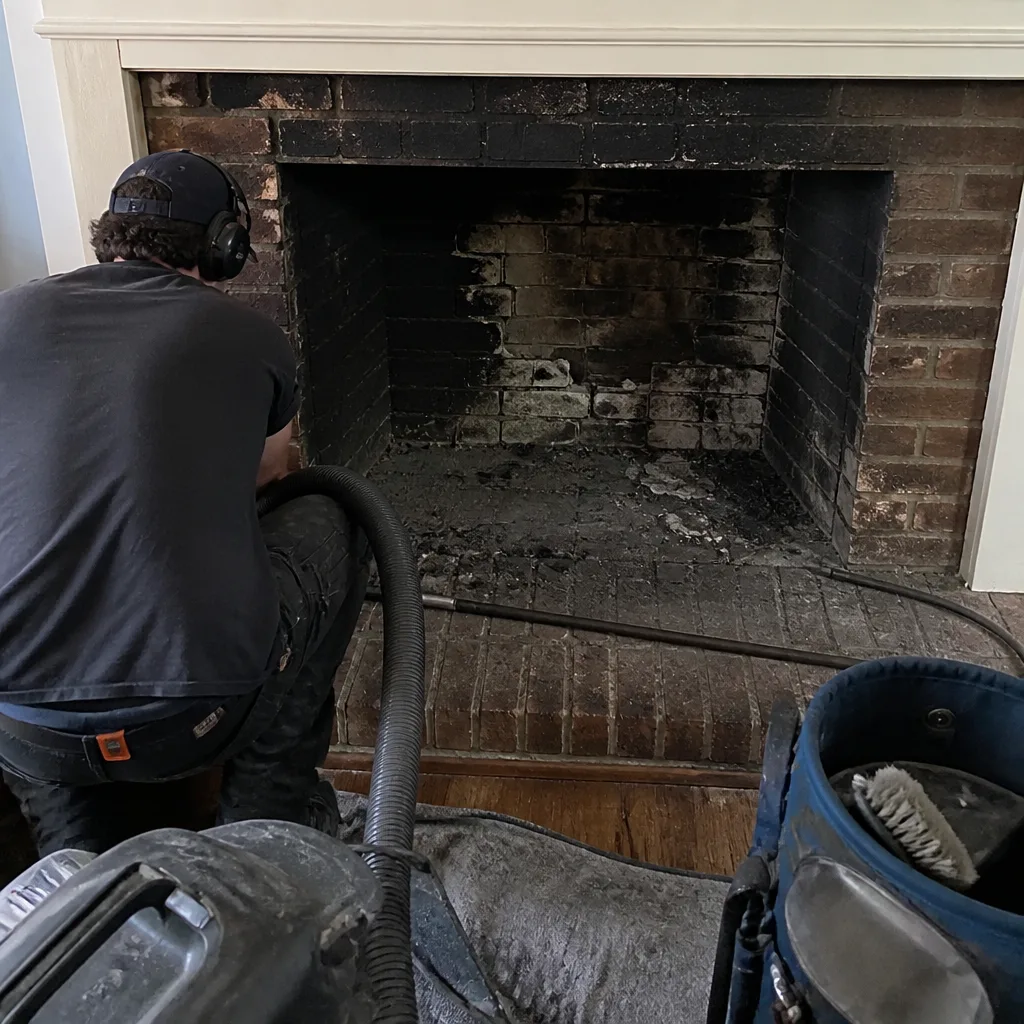 Before
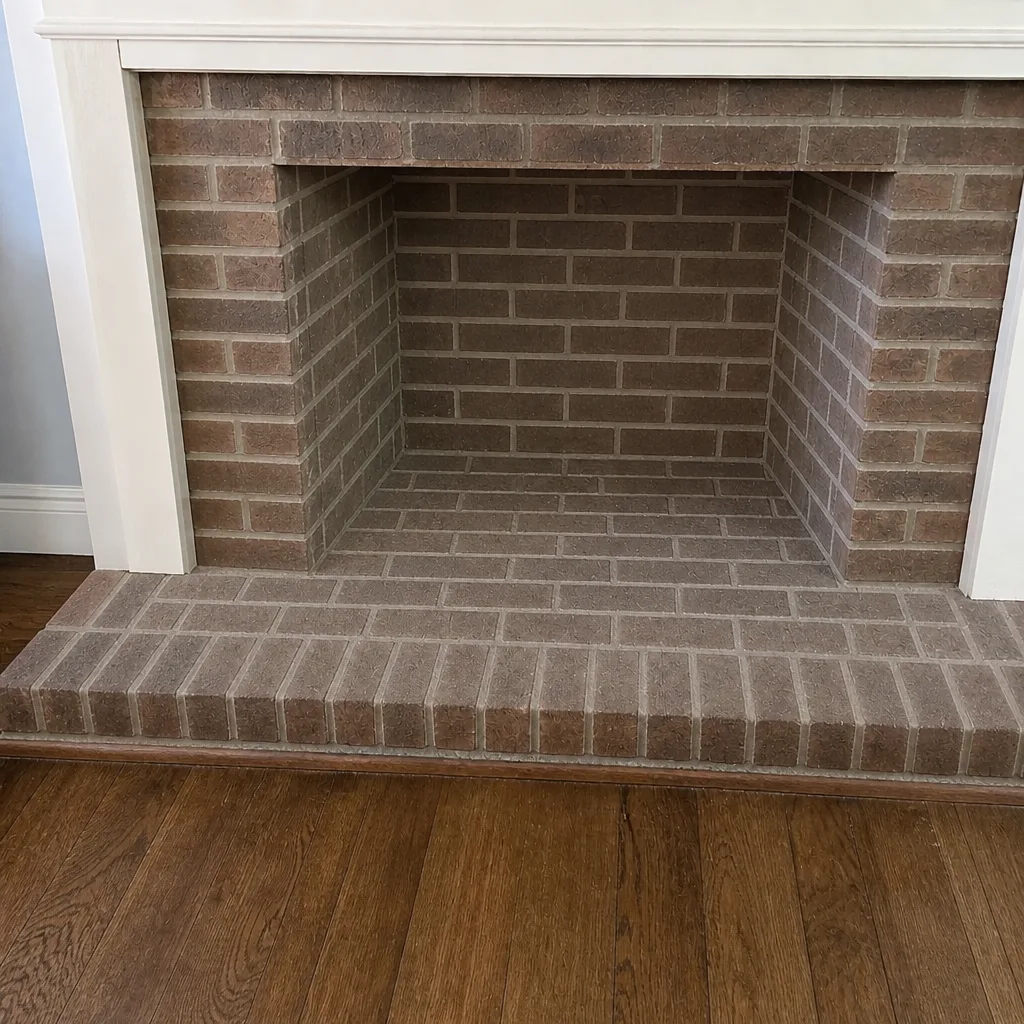 After
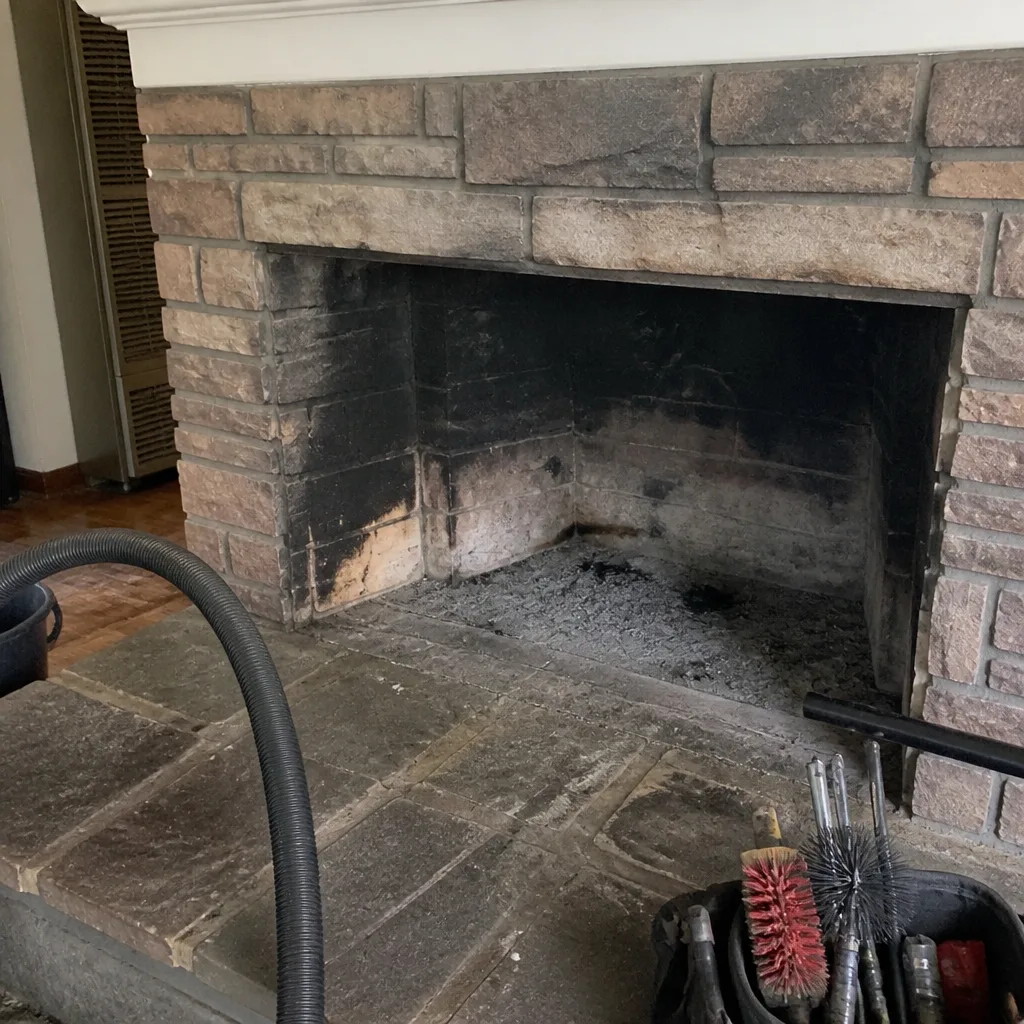 Before
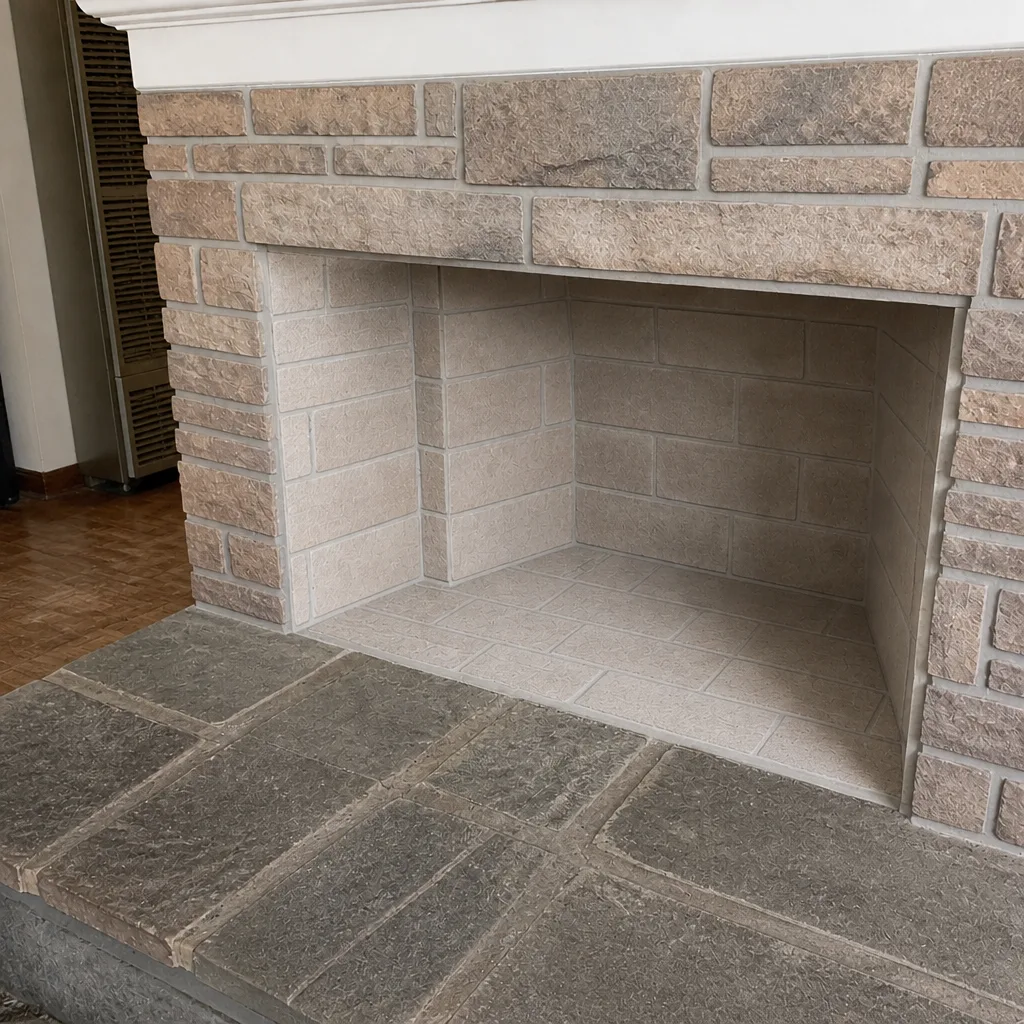 After
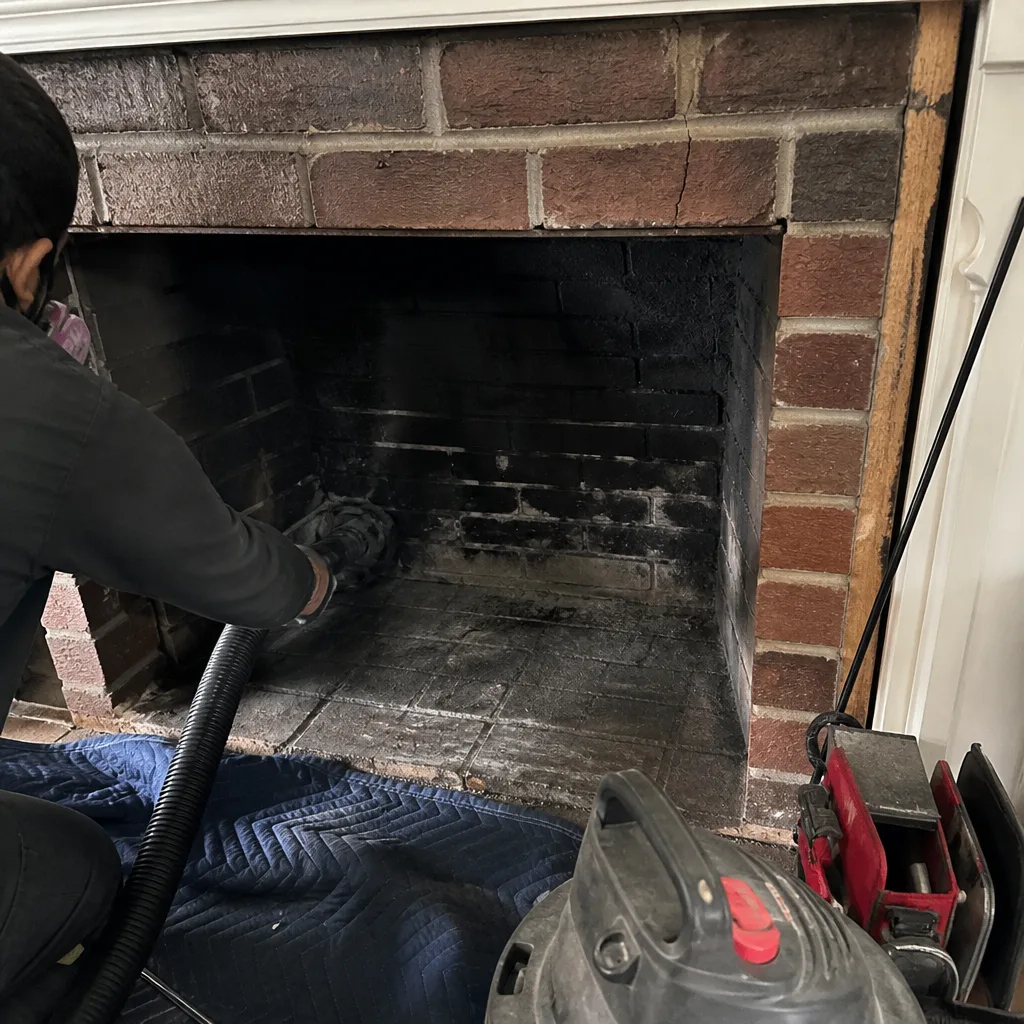 Before
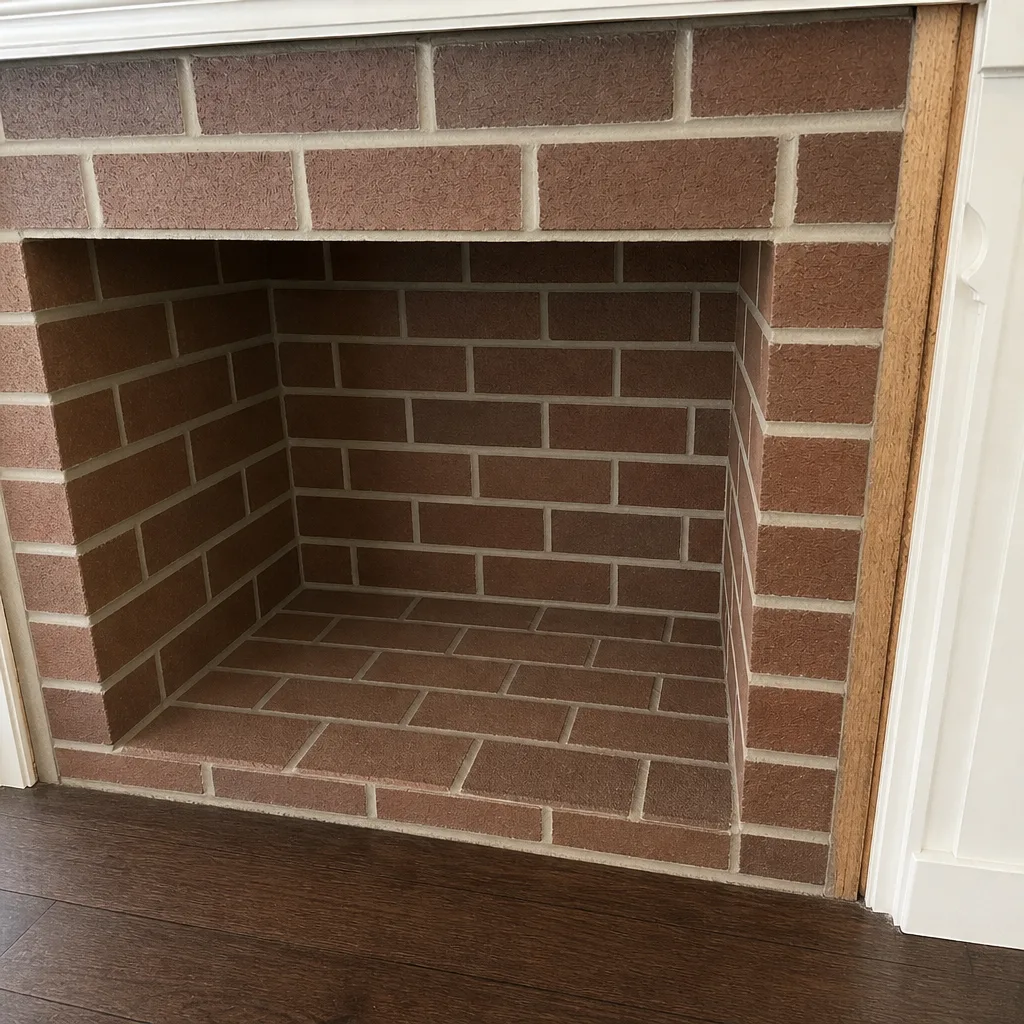 After
When to Call a Professional
There are a few clear scenarios where the right move is to call a specialist and get a real inspection before you do anything else.
If you’ve just bought a home with an existing fireplace or wood stove, get a professional inspection before you light the first fire. You don’t know what the previous owner did, and the camera will tell you. If your fireplace is losing draft, puffing smoke into the room, or producing a stronger smell than it used to, that’s a flue problem and not one to diagnose over the phone. If you can see damaged mortar joints between flue tiles from the top of the chimney, or a cracked crown, or a cap that’s tilted or rusting, those are all things a specialist should look at. If your dryer is taking longer than it used to dry a load, the vent may have a lint buildup that a proper dryer vent cleaning will resolve.
We offer free estimates in Durham. To book an inspection or a sweep, call (866) 389-3509. We answer 24/7. Fast dispatch from 7am to 7pm, Sunday through Friday.
Frequently Asked Questions
For a wood-burning appliance, you want a 316 or 316L stainless alloy flexible liner, sized to your flue, listed specifically for wood appliance use at the flue temperatures the system will see. DuraFlex is one recognized name in that category, but the brand matters less than the specification matching your application. Ask any contractor what alloy and gauge they’re using before work begins. Call (866) 389-3509 if you’d like us to inspect your flue and give you a written recommendation.
UL Listed is a minimum, not a guarantee. It means the product passed a specific safety standard, but not that it’s listed for your appliance type or your flue temperatures. You want a product that’s listed for the specific application (wood, gas, oil) at the temperatures your system will realistically produce. Ask the contractor for the product spec sheet and read the listing application line. Call (866) 389-3509 for a free estimate and we’ll walk you through what your flue actually needs.
Ask what brand, gauge, and material they’re installing, and whether it’s stocked on the truck or ordered for the job. A specialist names the brand and specification without hesitation; a generalist gives a vague answer and sources from the nearest home improvement store. The cap, liner, and sealants all have contractor-grade and builder-grade versions, and the difference shows up two or three seasons later. Call (866) 389-3509 to book an inspection with a chimney specialist.
Sometimes, yes. If the original clay tile flue has significant mortar joint deterioration, a new liner cannot be installed safely without resurfacing the masonry first. A camera inspection tells you which case you’re in. HeatShield is one recognized resurfacing system, and not every chimney company stocks or is trained on it. Ask the question directly. Call (866) 389-3509 for a camera inspection and a written estimate.
Durham sees meaningful rainfall across the year, and a builder-grade galvanized cap corrodes from the inside out at the seams and bolt holes. The long-term fix is a stainless steel or copper cap from a contractor-grade manufacturer like Olympia Chimney or Copperfield. The initial price is higher, but the service life is measured in decades rather than seasons. Call (866) 389-3509 for a free estimate on a replacement cap.
Ask what brand and model of liner they’re planning to install, what alloy and gauge it’s rated at, what standard it’s listed to and for which appliance types, what brand of crown sealant and masonry sealant they use, and whether the material is stocked on the truck or ordered for the job. A confident, professional answer names the products and specifications; a vague answer is your cue to look elsewhere. Call (866) 389-3509 if you’d like to see how we answer those questions.
The Bottom Line
The chimney cleaning brand that matters isn’t the brush; it’s the liner, the cap, the crown sealant, and the waterproofing that go into your chimney when a repair is needed. Ohio-grade materials installed with the wrong specification for your appliance fail two or three seasons later, well after the contractor is gone. The fix is product literacy: ask what brand and specification of material is going into your chimney, ask whether it’s listed for your appliance type, and ask whether it’s stocked or sourced job-by-job. A specialist answers those questions cleanly. We repair what we find so you don’t need a second company, and we’d rather you ask the questions than take our word for it. For a free estimate in Durham, call (866) 389-3509. We answer 24/7. Fast dispatch from 7am to 7pm, Sunday through Friday.
Written by the team at Durham Chimney Sweep, serving Durham since 2015.