
Last updated November 14, 2026
 Sweep & inspection
 Caps & crowns
 Flue relining
 Masonry repair
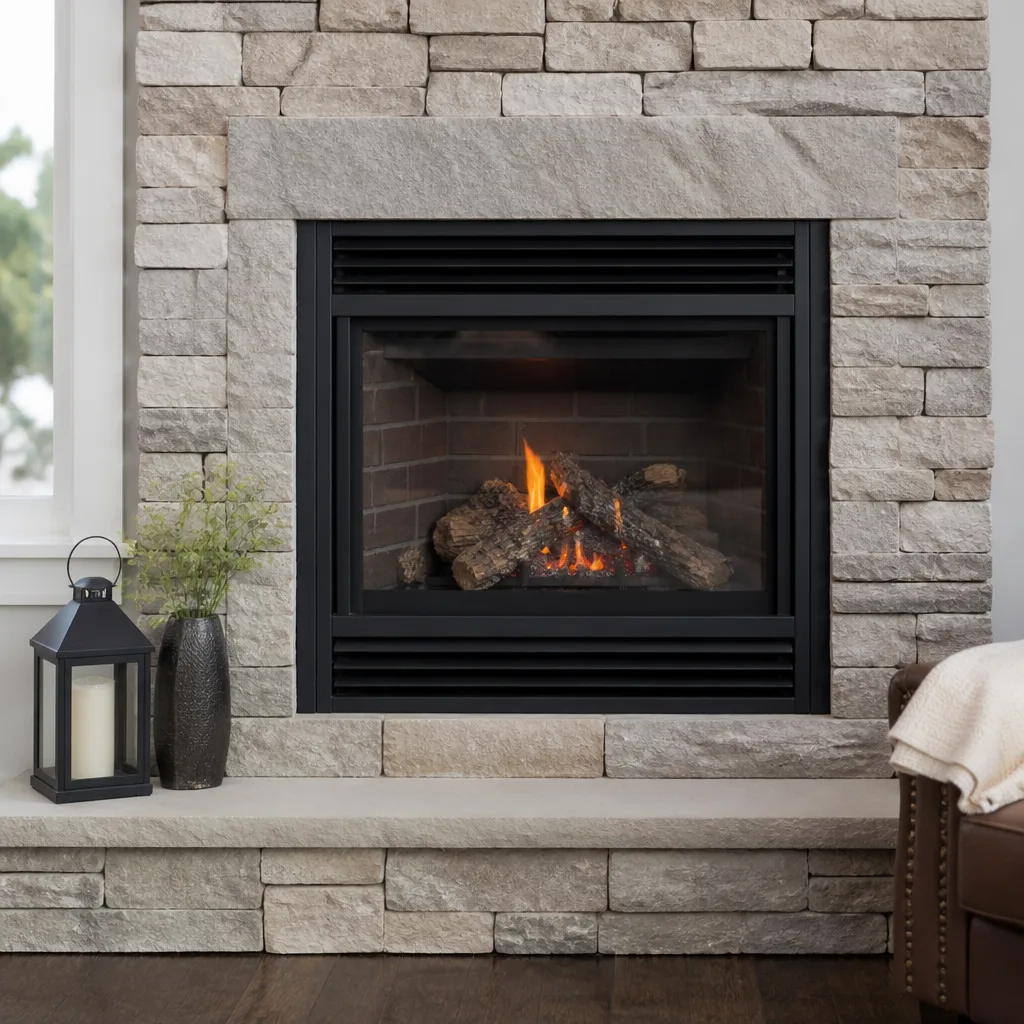 Gas fireplace service
Level 1 sweep and inspection to the NFPA 211 annual standard - flue, crown, cap, and flashing checked and photographed
Chimney sweep logs do not sweep chimneys. They loosen some creosote - which then falls where a brush and vacuum still have to collect it.
Chimney Sweep Maintenance Schedule: What to Do and When
Most homeowners treat a chimney sweep like a dentist appointment: something to remember once a year, ideally before it’s too late. But a single annual sweep is the floor, not the ceiling. The homeowners who avoid expensive liner and masonry repairs aren’t the ones with a calendar reminder. They’re the ones who tie specific tasks to seasons, burn volume, and weather events. That distinction matters in Durham, where a long humid summer and a short, sharp heating season create a moisture and creosote cycle you won’t read about in a generic checklist. What follows is the schedule we build for our own customers, month by month, with the tasks you can safely handle and the ones that need a camera and professional access.
Quick Answer
At minimum, get your chimney swept and inspected once a year, and schedule that service in late summer or early fall, before the first fire and before Durham’s chimney companies fill up for the season. Beyond that, the right schedule depends on how much you burn: households burning more than a cord of wood a year, or running a fire several times a week through winter, should plan a mid-season check. Add seasonal tasks, spring checks, and a call after any major storm.
Styles & brands we work with
- Sweep & inspection
- Caps & crowns
- Flue relining
- Masonry repair
- Gas fireplace service
Table of Contents
- The Core Annual Schedule
- A Month-by-Month Calendar for Durham
- Why Usage Thresholds Matter as Much as Dates
- Post-Winter Tasks Most Homeowners Skip
- What You Can Inspect Yourself and What You Can’t
- How Skipping Maintenance Compounds
- Common Mistakes to Avoid
- When to Call a Professional
The Core Annual Schedule
The foundation of any chimney maintenance plan is the annual inspection and sweep. Let’s start with the direct answer: the National Fire Protection Association recommends that chimneys, fireplaces, and vents be inspected at least once a year, and cleaned as needed. That “as needed” is doing a lot of work. It means the annual visit is a professional evaluation first, and a sweep second, if the flue actually needs one.
Here’s how to think about the annual baseline in Durham:
- Inspection: Once a year, every year, regardless of how much you burn. A fireplace you use twice a season still has a flue that can crack, a crown that can degrade, and a cap that can come loose.
- Sweeping: Performed when the inspection finds enough creosote or soot to warrant it. For light use, an annual sweep is often enough. For heavy use, once a year may not cover it (more on that below).
- Dryer vent cleaning: Once a year for most households, and more often if you dry heavy loads daily. This is part of the same home-venting safety picture, and it’s why dryer vent cleaning belongs on the same seasonal calendar as the chimney.
One task ties all of this together: book the annual service early. By the time the first cool evening hits the Triangle, chimney calendars are full. If you wait until you want a fire, you’ll be lighting it before anyone has looked at the flue. A plan made in August is worth more than a scramble in November. If you’re reading this and haven’t booked yet, a chimney sweep with a camera inspection is the best starting point.
A Month-by-Month Calendar for Durham
Durham’s climate shapes the calendar. Our summers are long, hot, and humid, and our heating season is short and often mild. That means the real work happens in the shoulder seasons, and the biggest enemy of a neglected chimney here isn’t fire, it’s trapped moisture. Here’s how we’d map a year for a Durham household:
- Late spring (May): Post-heating-season inspection window. This is when winter moisture damage shows up and is still fixable before it cures into a larger repair. Have the flue checked, the damper exercised, and the smoke chamber examined.
- Summer (June to August): Repair season. If the inspection found a cracked crown, a damaged cap, or a deteriorating flue, summer is the time to address it. Repairs are easier to schedule and the work has time to settle before the burning season. This is also the window when a HeatShield liner resurfacing job, or a DuraFlex reline for a deteriorated flue, can be planned and completed without pressure.
- Early fall (September): The pre-season sweep and inspection. Book this before the first fire. In Durham, September is when the smart bookings happen; October is when everyone calls at once.
- Late fall (October to November): First fires. If you haven’t had a pro look at the system, don’t light one until someone has. Cap and crown checks you can do yourself should already be done (see the section below).
- Winter (December to February): Active burning season. Watch for signs that the flue is underperforming: smoke rolling into the room, a damper that won’t close, or unusually strong odors.
- Post-storm: After any major storm, do a quick visual check of the cap and crown from the ground. If you see movement, cracks, or missing pieces, call for an inspection before the next fire.
That’s the shape of the year. The tasks shift with the season, but the principle holds: the annual sweep is the anchor, and everything else is scheduled around Durham’s weather and your own burning habits.
Why Usage Thresholds Matter as Much as Dates
A calendar date alone won’t tell you whether one sweep a year is enough. How much you burn, and how you burn it, determines whether your flue accumulates creosote fast enough to warrant a mid-season visit. A homeowner who lights a fire a few times a month has a very different flue from one who runs a wood stove as a primary heat source.
Use these thresholds as a rough guide, not a hard rule:
- Light use (a few fires a month): One annual sweep and inspection is typically enough.
- Moderate use (a fire several times a week through winter): Consider a mid-season check, especially if you burn softwood or unseasoned wood.
- Heavy use (more than a cord of wood a year, or a wood stove as a primary heat source): Plan a mid-season inspection once the burning is well underway, and be ready to sweep again before the season ends.
Two things make creosote accumulate faster: burning wet or unseasoned wood, and burning a fire “cool” so it smolders rather than burns hot. Both are common in Durham, where homeowners sometimes cut and burn the same season. The fix is simple but it matters. Season your wood properly, burn hot fires, and keep the flue clear. If you’re uncertain whether your flue is ready for another season, we recommend looking at it rather than guessing. That’s what a Durham Chimney Sweep inspection is for.
One more threshold: gas inserts and gas fireplaces. They don’t produce creosote the way wood does, but they still have venting that needs an annual inspection. Don’t skip the annual visit just because you burn gas.
Post-Winter Tasks Most Homeowners Skip
Spring is the most overlooked part of the chimney calendar, and it’s the most important for catching problems while they’re still cheap to fix. Winter does the damage; spring is when you find it. Here are the post-winter tasks we recommend having done, and why each matters in Durham:
- Damper function check. A damper seizes over a season of disuse or exposure. If it’s stuck open, you lose heat up the flue all summer and any odor comes back into the room. If it’s stuck closed, you can’t safely light a fire in the fall. Exercising the damper in spring catches this early.
- Smoke chamber inspection. The smoke chamber, the sloped space above the firebox and below the flutter, is where creosote can collect and where rough masonry can trap deposits. A camera inspection gets a proper look at it.
- Moisture damage check. This is the big one in Durham. Our humid summers and the winter freeze-thaw cycle both stress the crown and the masonry. A crack that appears in March is a nuisance; the same crack after a summer of rain and a winter freeze can turn into a repair measured in hundreds, not thousands. Spring inspection is your chance to catch it in the nuisance phase.
- Cap and screen check. Caps take a beating from wind and weather. A missing cap or screen lets water, birds, and debris into the flue.
The broader principle: don’t wait for a problem to announce itself. By the time water stains show up on your ceiling or the fire won’t draft properly, you’ve usually moved from a maintenance task to a repair. The Durham climate rewards homeowners who check in spring.
What You Can Inspect Yourself and What You Can’t
There’s a clear line between what a homeowner can safely check and what requires a camera, a ladder, and professional access. Knowing the line keeps you safe and tells you when it’s worth paying for an inspection.
What you can check yourself, from the ground:
- The cap and spark screen at the top of the chimney (from a safe distance, looking up). Is it intact, or is a piece missing?
- The exterior crown and the masonry around it. Any visible cracks, crumbling, or missing mortar? Any staining on the outside of the chimney?
- The visible damper, from inside the firebox. Does it open and close smoothly? Is it closed when not in use?
- Overall draft behavior. Does smoke roll into the room when you light a fire? Does the fire burn lazily rather than hot?
What requires a professional:
- Anything at height. Climbing onto a roof to inspect a chimney is not a homeowner task. The chimney sweep is done from the top of the flue with the right tools, and the inspection is done with a camera.
- The smoke shelf, the flutter, and the full length of the flue liner. These need camera access. A homeowner can’t see inside the flue, and that’s exactly where the problems hide.
- The condition of the liner itself. Is the clay tile intact, or is it cracked? Hairline cracks in a flue liner go from a maintenance note to a safety issue fast, and only a camera reveals them.
If you’re wondering where your own chimney lands, that’s a good reason to have someone look at it. We repair what we find, so a single visit can go from a clean inspection to a plan for whatever needs attention.
How Skipping Maintenance Compounds
The cheapest version of chimney maintenance is the version you do on schedule. Deferred maintenance has a cost curve, and it’s not a straight line. Each skipped step makes the next step more expensive. Here’s the curve, in plain terms, without dollar figures attached to a specific job:
- Stage one: creosote buildup. A sweep clears it. This is the routine, scheduled task.
- Stage two: glazed creosote. If the creosote is left to cure into a hard, glazed layer, a standard sweep won’t remove it. It takes a different process, and it costs more. This is why the annual sweep is cheap insurance and the deferred sweep is not.
- Stage three: liner damage. A heavy creosote load burns hotter, and heat can crack the liner. Now the task is no longer a sweep, it’s a reline.
- Stage four: water damage and crown failure. A cracked crown lets water into the masonry. Over a Durham summer, that water works on the mortar and the flue. Repairs here start to involve actual masonry, not just the flue.
- Stage five: the compounding stack. Now you’re fixing the liner and the crown, and you may be looking at structural work. The curve has moved from a maintenance task to a repair project.
And then there’s the safety dimension, which is the reason all of this matters. Creosote is flammable. A neglected flue is a fire risk, and a damaged flue can let combustion byproducts into the home, including carbon monoxide. That’s not a scare tactic; it’s the reason the NFPA recommends annual inspection. The good news: most of this curve is avoidable by catching problems early. When we recommend a liner or chimney repair, we show you the camera evidence so you can see exactly what we see. And if it can safely wait, we’ll tell you that too.
For a related hazard in the same house, the same logic applies to the dryer vent. Lint buildup is a fire risk, and it’s why regular dryer vent cleaning is on the same schedule.
Common Mistakes to Avoid
- Waiting until you want a fire to book the sweep. In late September and October, Durham chimney companies fill up. Book in summer or early fall so the flue is ready before the first fire.
- Treating a sweep as the whole job. A sweep is cleaning. The inspection is the part that finds problems. Confirm the visit includes an inspection and a camera look at the flue.
- Skipping the spring check. The biggest problems in Durham start as small ones in spring, when summer moisture and winter freeze-thaw have their chance to make them worse.
- Assuming a gas fireplace doesn’t need an annual visit. Gas venting still needs inspection, and a gas insert can still have issues. Don’t skip the annual visit because there’s no creosote.
- Ignoring the dryer vent. It’s a separate fire risk from the chimney, and it’s easy to forget because it’s not a fireplace. Same annual schedule, same attention.
- Burning unseasoned wood to save time. Wet wood burns cooler and deposits more creosote. It’s the most common cause of a flue that needs attention sooner than expected.
- Never checking on your own cap and crown. These are tasks a homeowner can do from the ground, and they catch problems before they turn into repairs.
When to Call a Professional
Some situations call for a professional rather than a homeowner check. Call when: smoke rolls into the room when you light a fire, the fire burns lazily with poor draft, you see visible cracking or staining on the exterior chimney or crown, you smell a strong odor even when the fireplace is unused, a major storm has passed through, you’ve moved into a home with a fireplace you’ve never used, or your annual inspection is overdue by a year. In each case, a camera inspection is the right next step, and it’s what tells you whether the task is a routine sweep or a repair.
Durham Chimney Sweep offers free estimates in Durham. Call (866) 389-3509 and we’ll set up a visit. We answer 24/7, and fast dispatch runs from 7am to 7pm, Sunday through Friday. We’re a dedicated chimney company, not a general contractor, so what we find and what we fix are the same job.
See the difference
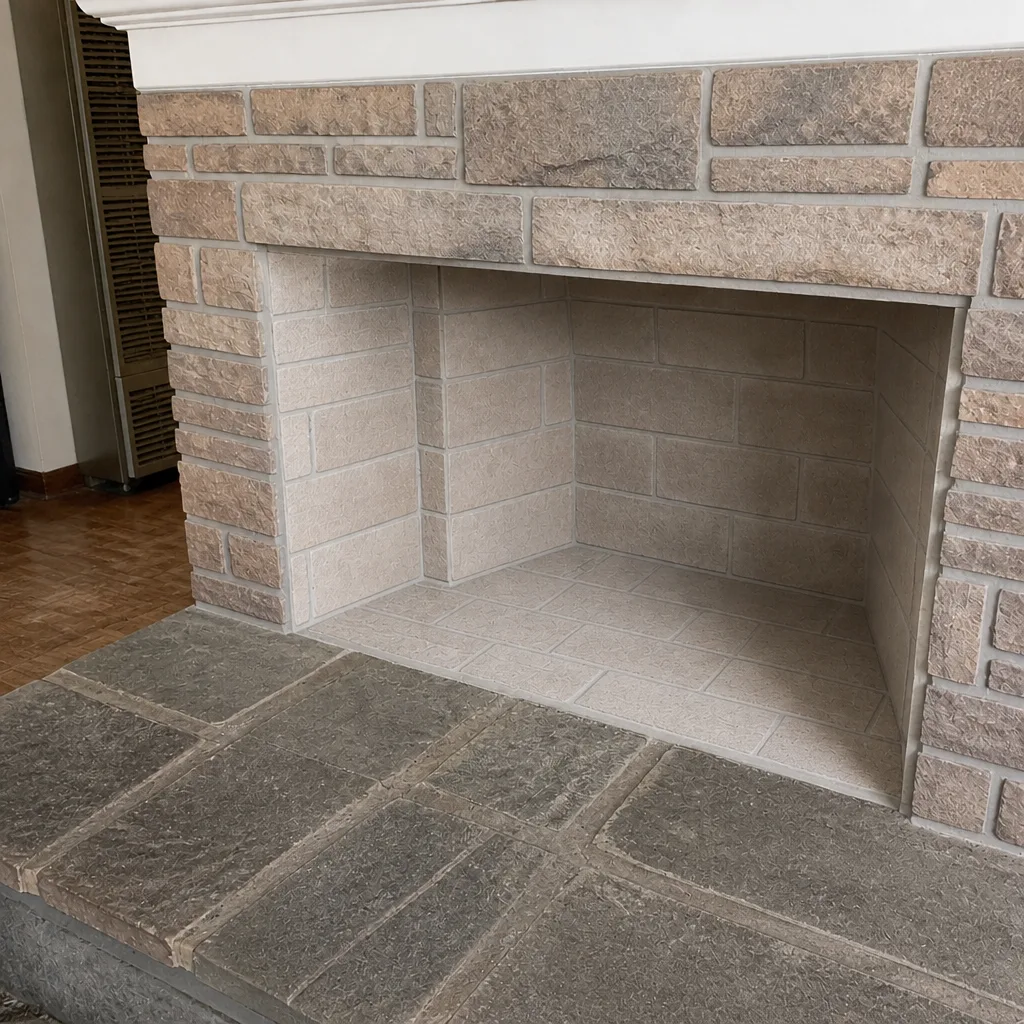
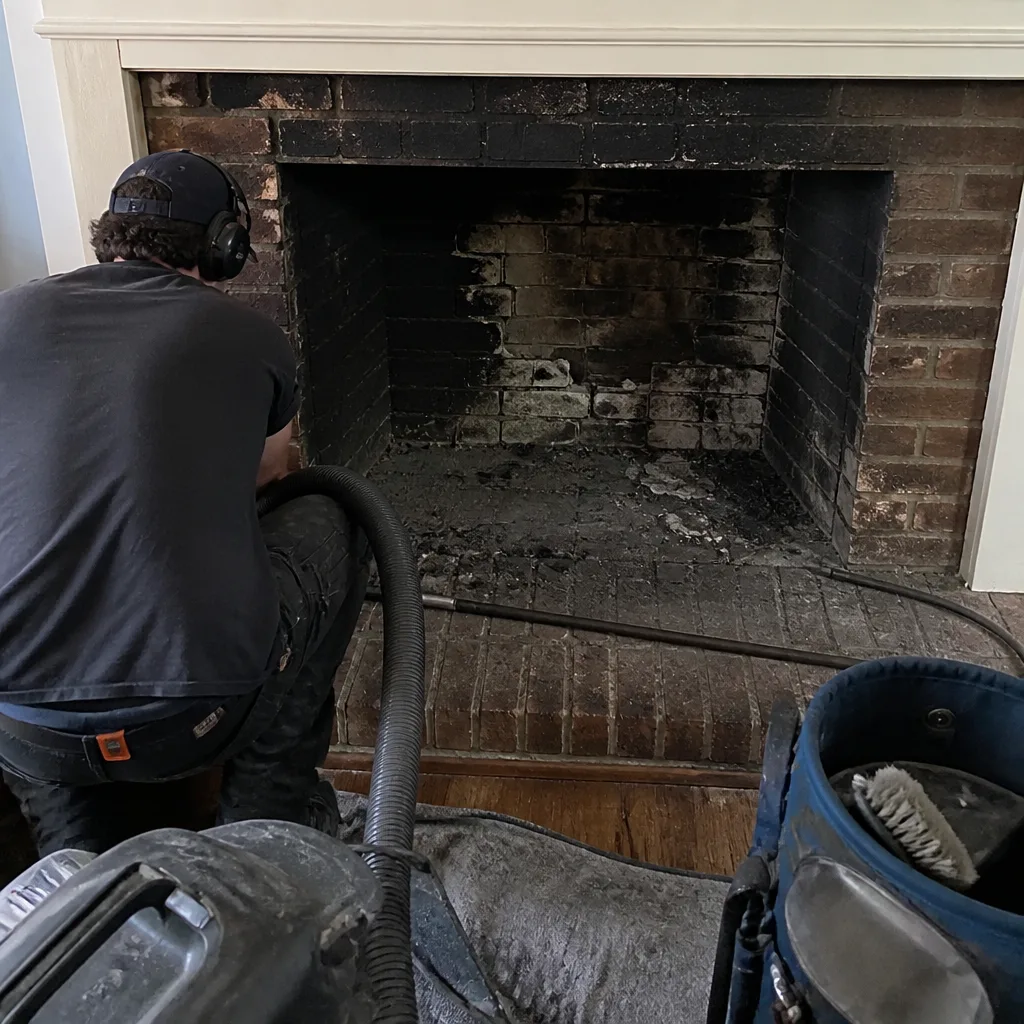 Before
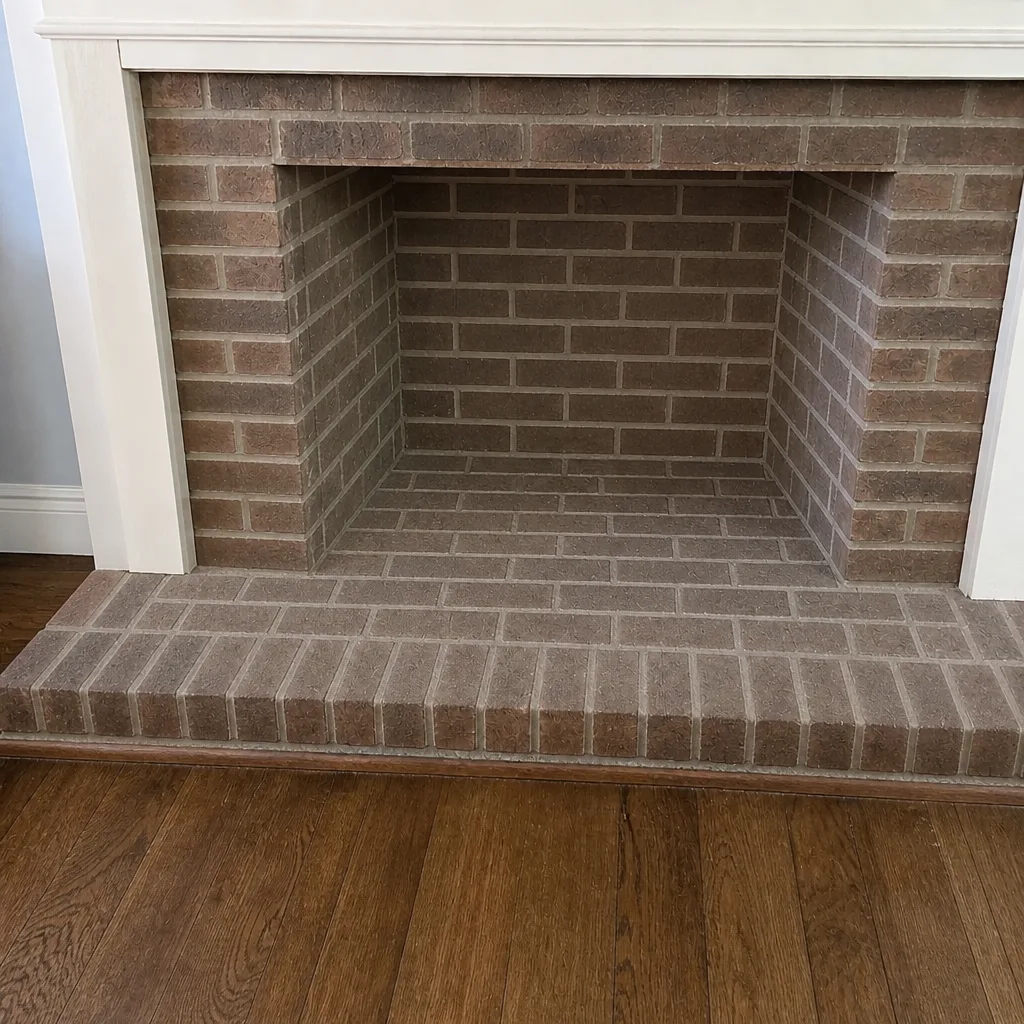 After
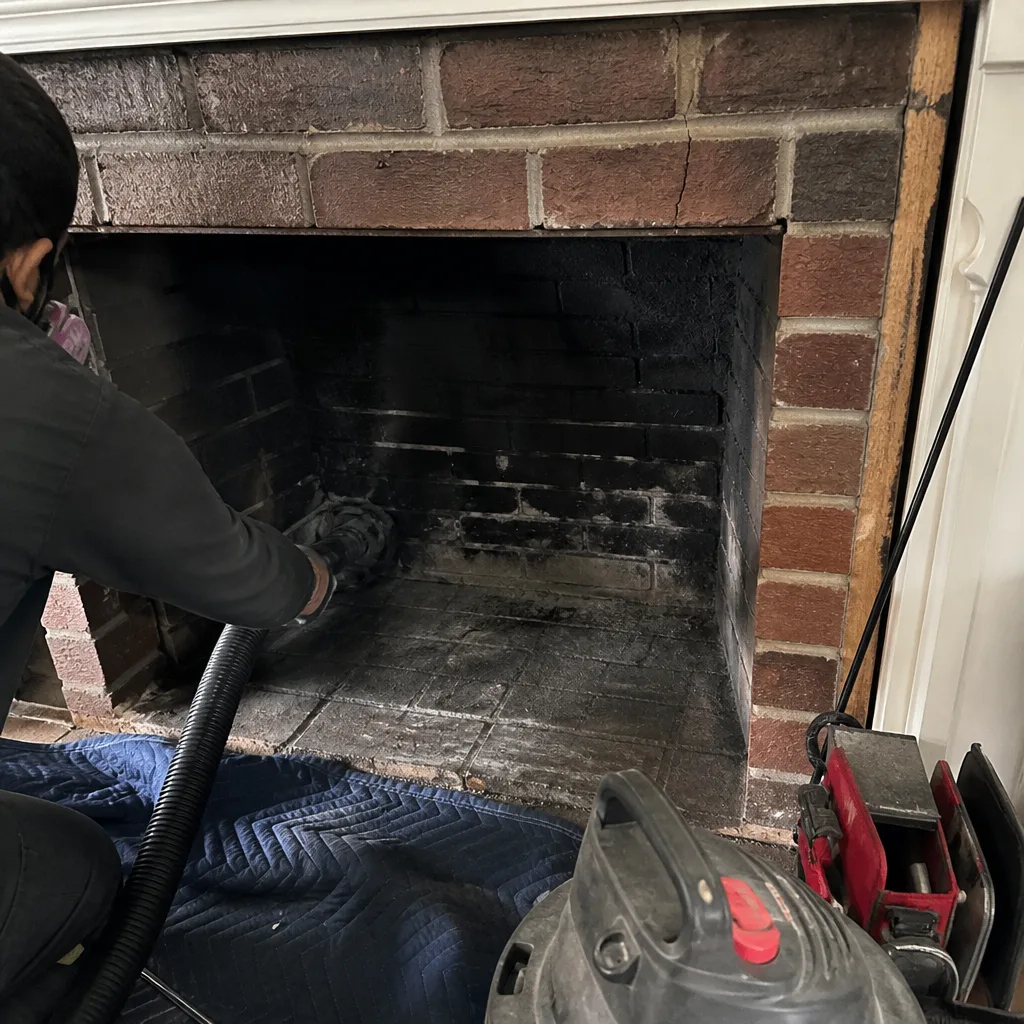
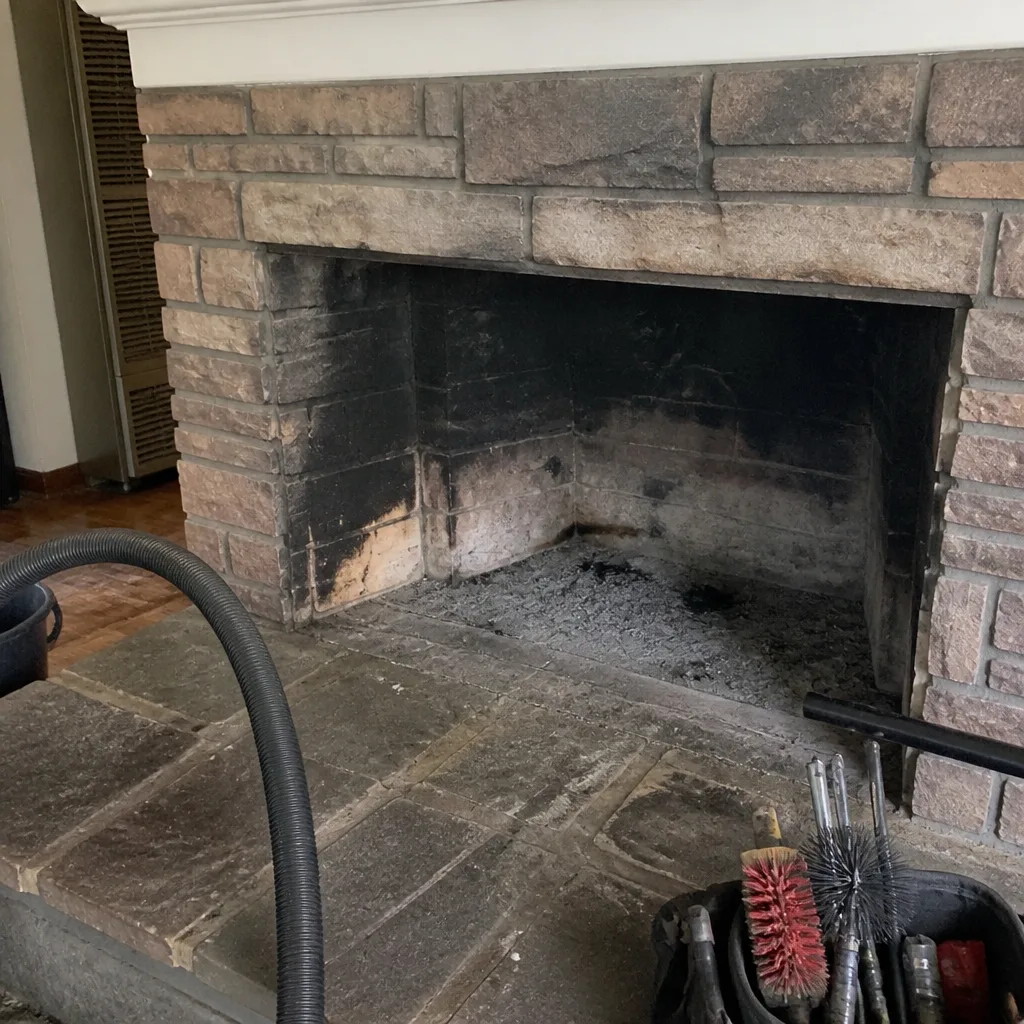 Before
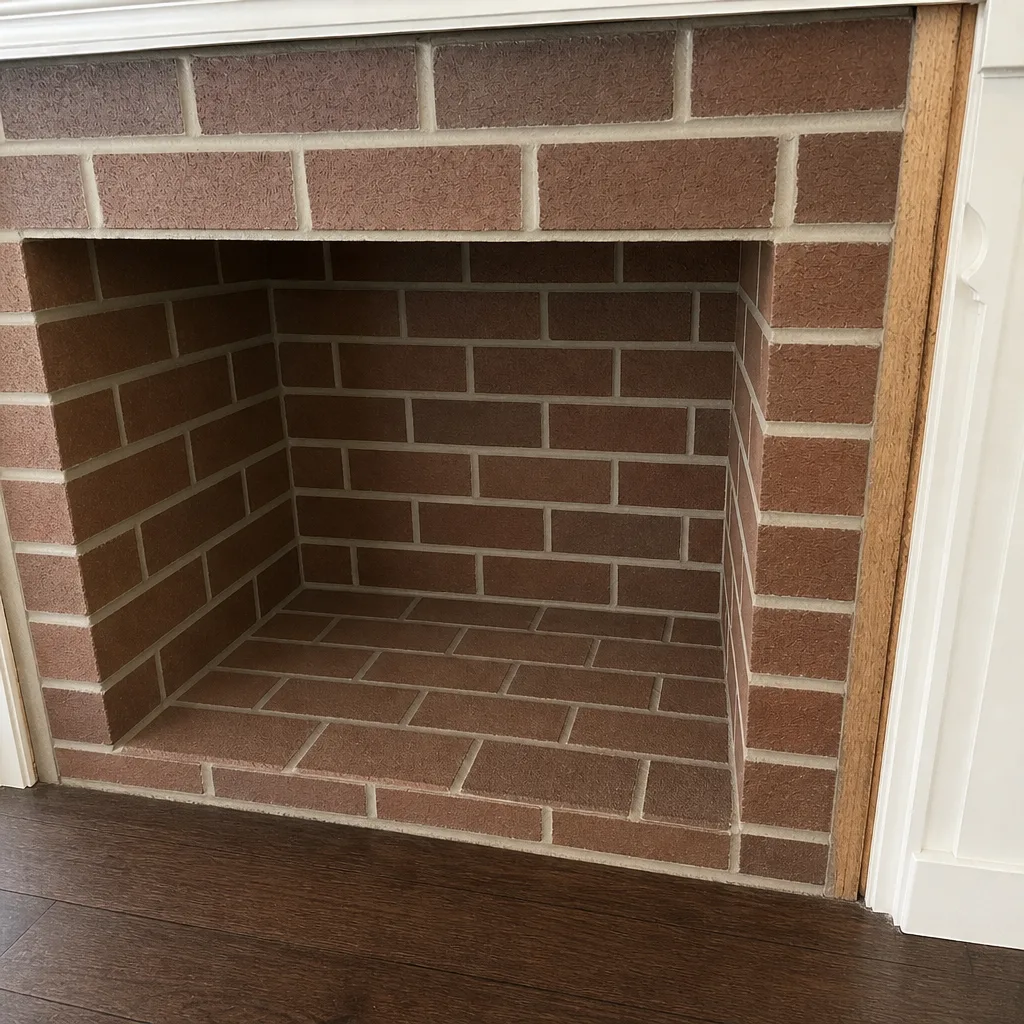
 After
 Before
 After
Frequently Asked Questions
Once a year in most cases, and more often if you burn heavily. The annual visit includes an inspection, and the sweep happens if the inspection shows the flue needs it. Households burning more than a cord of wood a year, or running a fire several times a week through winter, should plan a mid-season check as well. Call (866) 389-3509 for an exact quote. Estimates are free.
Late summer or early fall, ideally before the first fire of the season. We recommend late August through September. By October, most Durham chimney companies are booked through the first cold snap. Earlier is better if you want the flue looked at before you need it.
Not always. The liner question comes down to what a camera inspection shows. A cracked or deteriorating flue liner is a genuine safety issue, and in that case a reline is the answer. But if the liner is intact, you don’t need one, and we’ll tell you that. When we recommend a liner or resurfacing, we show you the camera evidence so you can see what we see. We work with industry brands including DuraFlex and HeatShield, which is relevant to the question of how a reline gets done.
Creosote builds up, and at first the cost is a more involved sweep. Left longer, glazed creosote and a heated flue can crack the liner, which turns a routine task into a reline. Longer still, a cracked crown lets water into the masonry. The safety side is the reason this matters: creosote is flammable, and a damaged flue can let combustion byproducts into the home. The good news is that catching it early is much cheaper than fixing it late.
Yes, from the ground. Check the cap and screen, look at the crown and exterior masonry for cracks or staining, exercise the damper, and watch for smoke rolling into the room. What you can’t do yourself is see inside the flue, and that’s where a camera inspection comes in. Leave roof access to a trained professional.
Yes, it belongs on the same annual calendar. Dryer vents and chimneys share one job: safely moving heat and combustion byproducts out of your home. Lint buildup is a fire risk, and it’s easy to forget because the dryer doesn’t announce a problem the way a chimney might. Once a year is right for most households.
The Bottom Line
The annual chimney sweep and inspection is the foundation of a safe home, but the homeowners who avoid expensive repairs follow a schedule built around the Durham climate, not a single calendar date. Book the sweep in late summer or early fall. Do the spring check for damper function, moisture damage, and smoke chamber inspection. Recognize that usage matters as much as the calendar: heavy burners need a mid-season look, and light burners can rely on the annual visit. Do the checks you can safely do from the ground, and leave the flue to a professional. It’s a schedule that pays for itself in avoided repairs.
Contact
If you’d like to get your chimney on a schedule, we’re here to help. Durham Chimney Sweep offers chimney sweeping, chimney repair, and dryer vent cleaning, with professional-grade materials from brands chimney specialists trust. Call (866) 389-3509 for a free estimate. We answer 24/7, and fast dispatch runs from 7am to 7pm, Sunday through Friday.
Written by the team at Durham Chimney Sweep, serving Durham since 2015.